Reef tank lighting is often one of the most misunderstood aspects of reef keeping. Many beginners assume brighter lights automatically mean healthier corals, but successful reef lighting is about balance, spectrum, and consistency.
This guide explains how reef lighting works, what corals actually need, and how to approach lighting decisions without overcomplicating your setup.
Corals rely on light as their primary energy source through a process called photosynthesis. The type, intensity, and duration of light directly affect coral growth, colour, and overall health.
Poor lighting can lead to coral stress, bleaching, or algae problems, while properly tuned lighting supports long-term stability.

Not all light is equal. Reef lighting focuses heavily on blue and violet wavelengths, which penetrate water effectively and support coral photosynthesis. White light helps balance colour perception but plays a smaller role biologically.
Rather than chasing perfect spectrum charts, beginners should focus on using reef-safe lighting with proven spectrum presets.
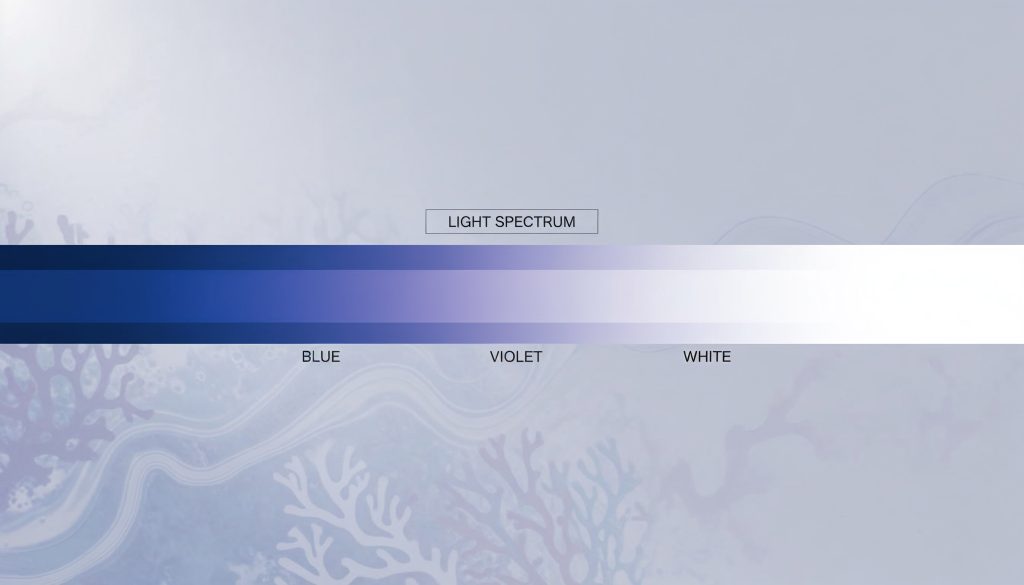
Not all light is equal. Reef lighting focuses heavily on blue and violet wavelengths, which penetrate water effectively and support coral photosynthesis. White light helps balance colour perception but plays a smaller role biologically.
Rather than chasing perfect spectrum charts, beginners should focus on using reef-safe lighting with proven spectrum presets.
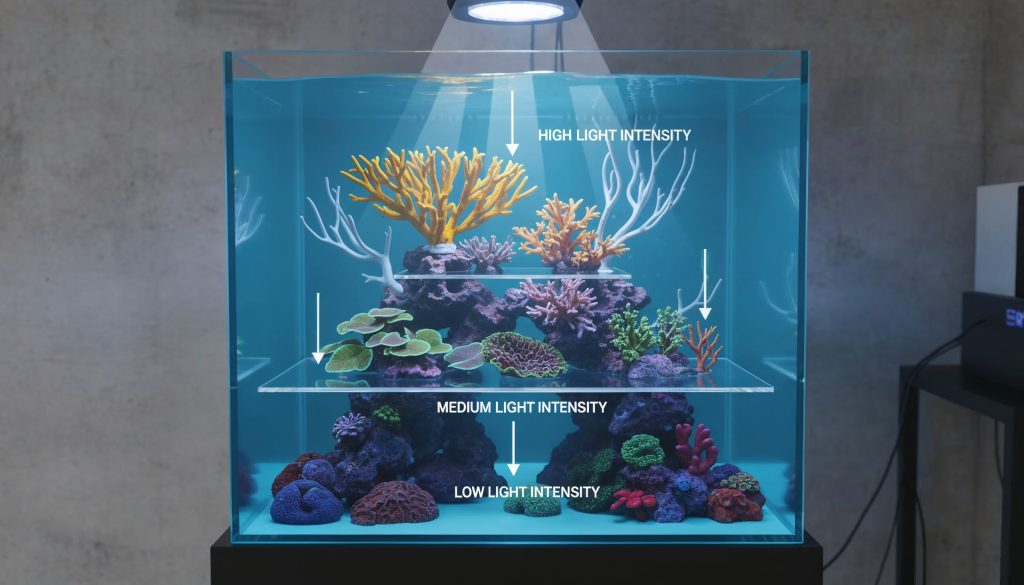
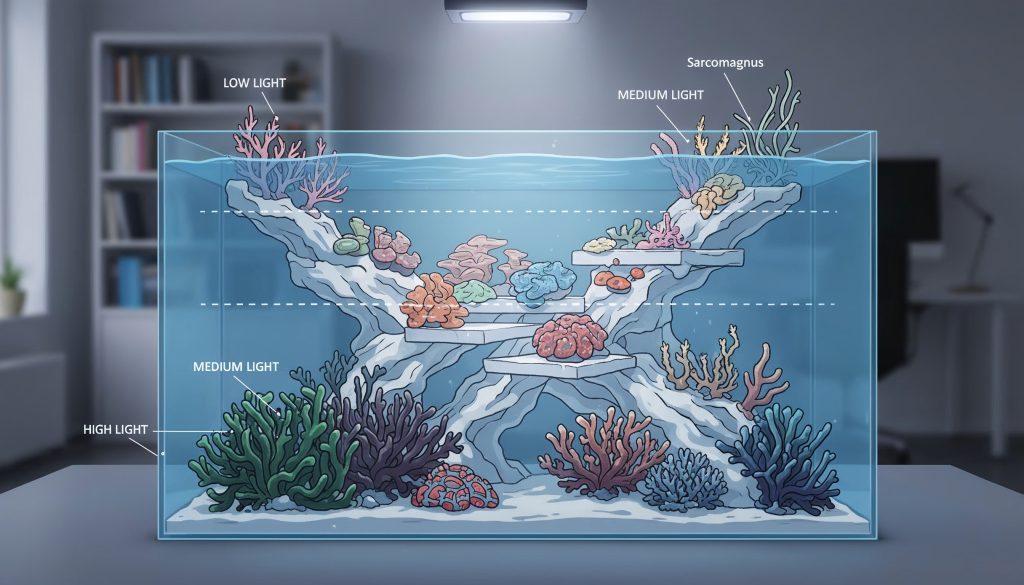
Different corals require different light intensities. Soft corals and many LPS corals thrive under moderate lighting, while SPS corals generally need stronger, more focused light.
Instead of constantly adjusting brightness, coral placement within the tank should be used to match each coral’s light preference.
Most reef tanks run their lights for eight to ten hours per day. Longer lighting periods do not always improve coral health and often increase algae growth.
Consistency matters more than duration. Using timers or automated schedules helps maintain stable lighting patterns that corals can adapt to over time.
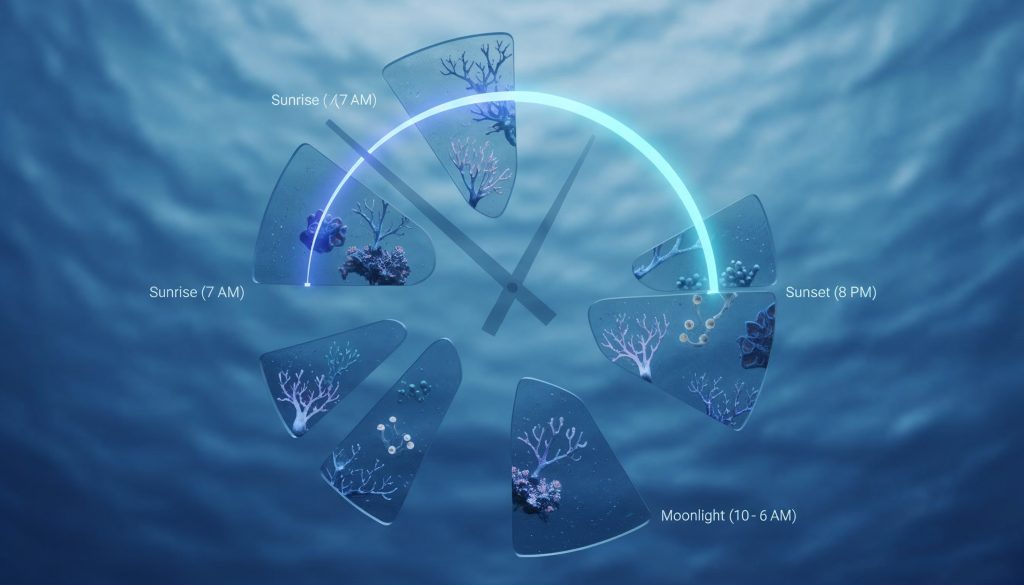
A common mistake is changing lighting settings too frequently. Sudden increases in intensity or spectrum shifts can stress corals. Another mistake is comparing lighting setups without considering tank depth, coral type, and water clarity.
Slow adjustments and observation lead to better results than constant tweaking.
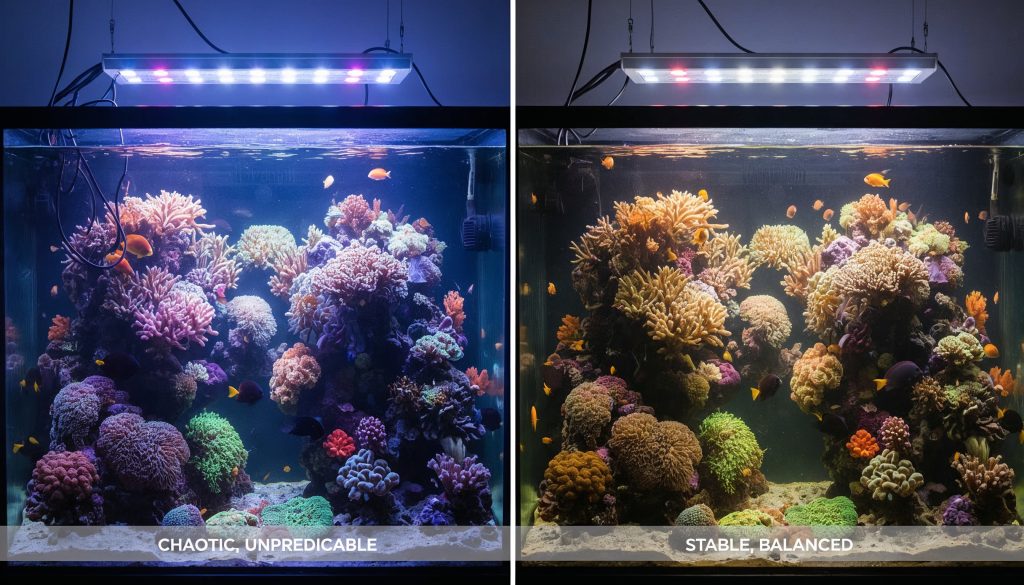
Reef tank lighting does not need to be complicated. By understanding basic principles and focusing on consistency, reef keepers can create lighting conditions that support coral health without unnecessary stress or expense.
Lighting works best when treated as part of the overall system, not an isolated adjustment.