Best Beginner Reef Fish for a Peaceful Community Tank
One of the biggest mistakes beginners make is treating coral placement like decoration.
At first, everything looks fine. You place corals where they “look nice”, maybe fill gaps in your scape, and the tank feels alive. But after a few days or weeks, you start noticing changes. Some corals stop opening fully, colours begin to fade, or worse, tissue starts to recede.
From experience, this is rarely random.
Corals are extremely sensitive to their environment. Where you place them determines how much light they receive, how strong the flow hits them, and even how they interact with nearby corals.
Placement isn’t just positioning. It’s survival.
Once you understand this, reef keeping becomes a lot more predictable.
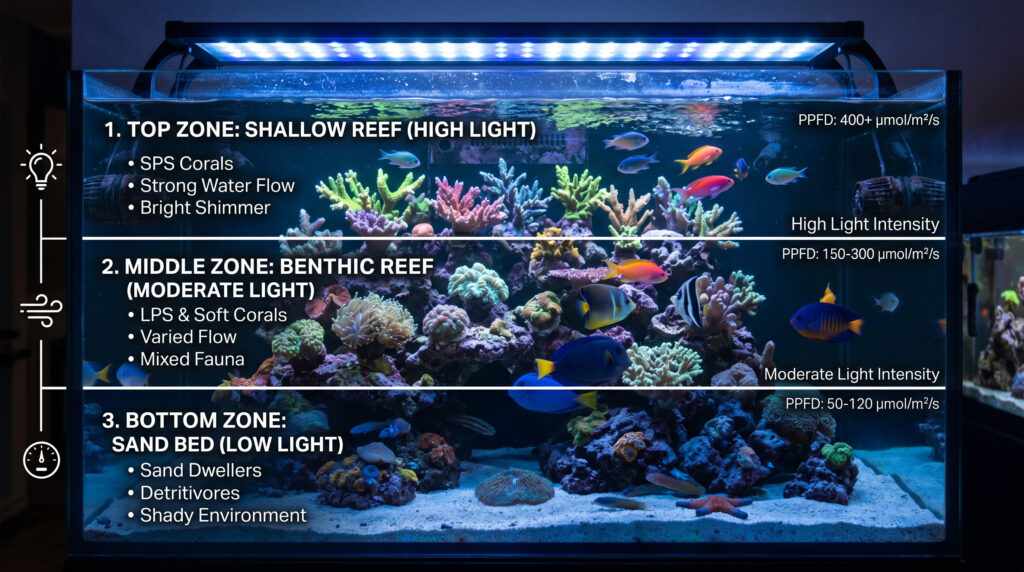
Every reef tank naturally forms zones, even if you don’t plan for them.
The top of the tank receives the strongest light and most direct flow. The middle section is more balanced, while the bottom is usually lower light with calmer movement.
Think of it like this:
After years of reefing, you realise that most coral issues come from ignoring these zones.
Instead of forcing corals to adapt, it’s always better to match the coral to the zone. When you get this right, growth becomes natural instead of forced.
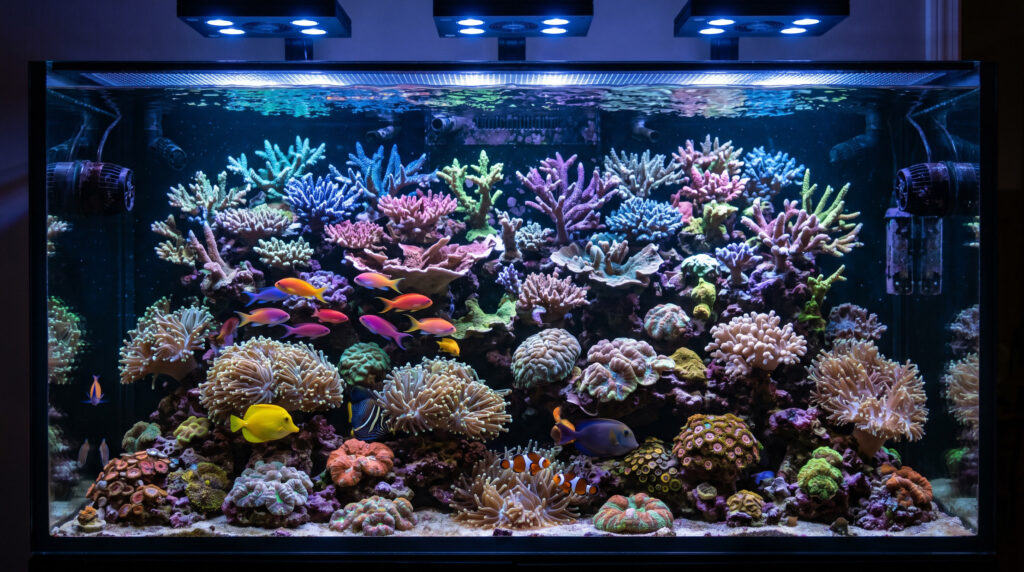
Lighting is usually the first thing people think about, and for good reason.
Corals rely on light for energy, especially those with symbiotic algae (zooxanthellae). But more light doesn’t always mean better results.
From experience, too much light is actually more damaging than too little.
General placement guideline:
One mistake beginners make is placing everything high up because it “looks premium”. In reality, many corals will bleach or stress under excessive light.
Always acclimate corals slowly if you plan to move them upwards. Sudden exposure is one of the fastest ways to damage a healthy coral.
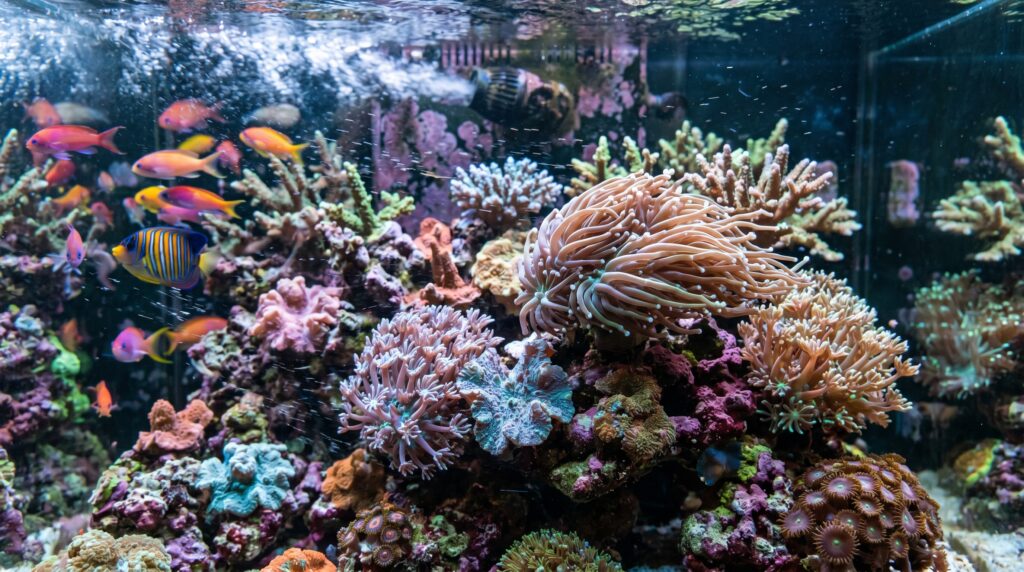
Lighting gets all the attention, but flow is what keeps your tank alive behind the scenes.
Water movement does more than just make the tank look dynamic. It:
Different corals react differently to flow:
Too much direct flow can cause tissue damage or prevent corals from opening. Too little flow leads to stagnant areas where algae and detritus build up.
From experience, random flow is always better than constant directional flow.
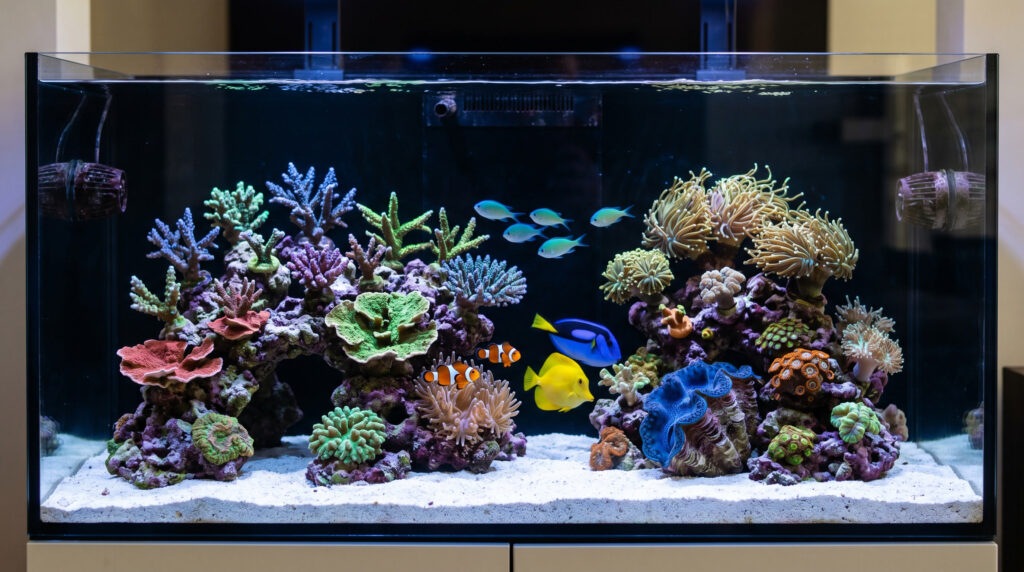
One of the most common beginner mistakes is placing corals too close together.
At the start, everything looks spaced out and clean. But over time, corals grow, expand, and in some cases, start competing aggressively for space.
Some corals extend sweeper tentacles that can sting nearby colonies. Others spread rapidly and take over rock surfaces.
From experience:
A well-planned tank may look slightly empty at first, but it becomes balanced and full over time.
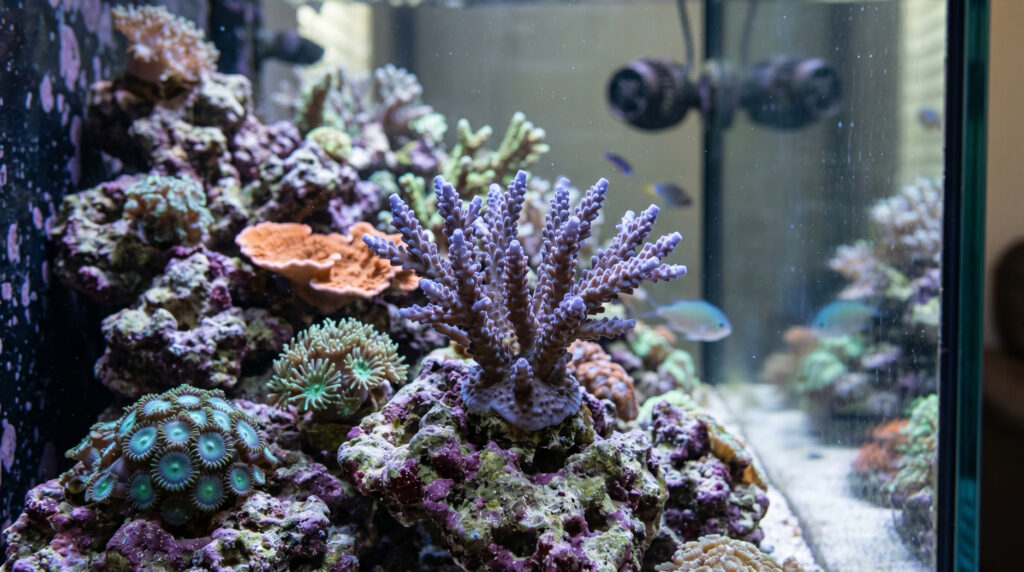
This is something almost every reefer learns the hard way.
You place a coral, then second-guess yourself. Maybe the colour isn’t right, maybe it’s not opening fully, so you move it again. And again.
Each time you move a coral, you reset its adjustment period.
Corals need time to:
From experience, constant movement creates more stress than poor placement.
Place with intention, observe carefully, and only adjust when necessary.
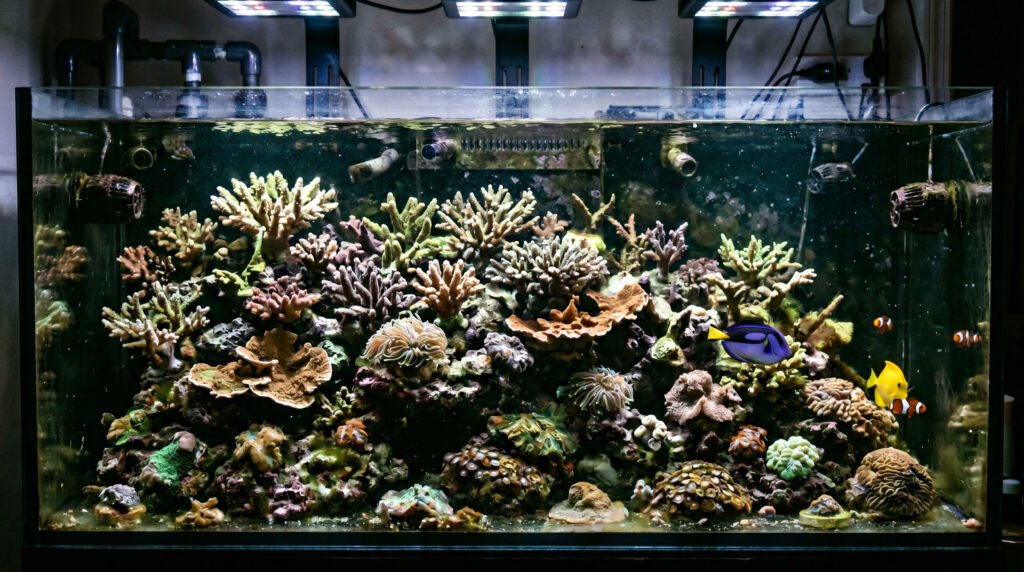
After years in the hobby, the same mistakes keep appearing:
Most coral problems are not caused by bad water parameters.
They’re caused by poor placement decisions.
Coral placement is one of the most underrated skills in reef keeping.
When done right, everything becomes easier:
You stop reacting to problems and start preventing them.
That’s when your reef starts to feel mature.
Coral placement is one of the most underrated skills in reef keeping.
When done right, everything becomes easier:
You stop reacting to problems and start preventing them.
That’s when your reef starts to feel mature.