Best Beginner Reef Fish for a Peaceful Community Tank
One of the most exciting moments in reef keeping is finally adding fish.
After weeks of cycling, testing, adjusting water parameters, and staring at an empty tank, livestock finally brings movement and personality into the system.
But this is also where many beginners make costly mistakes.
From experience, people often choose fish based only on appearance without considering temperament, compatibility, adult size, or long-term behaviour. A peaceful-looking juvenile can eventually become territorial, aggressive, or unsuitable for smaller reef systems.
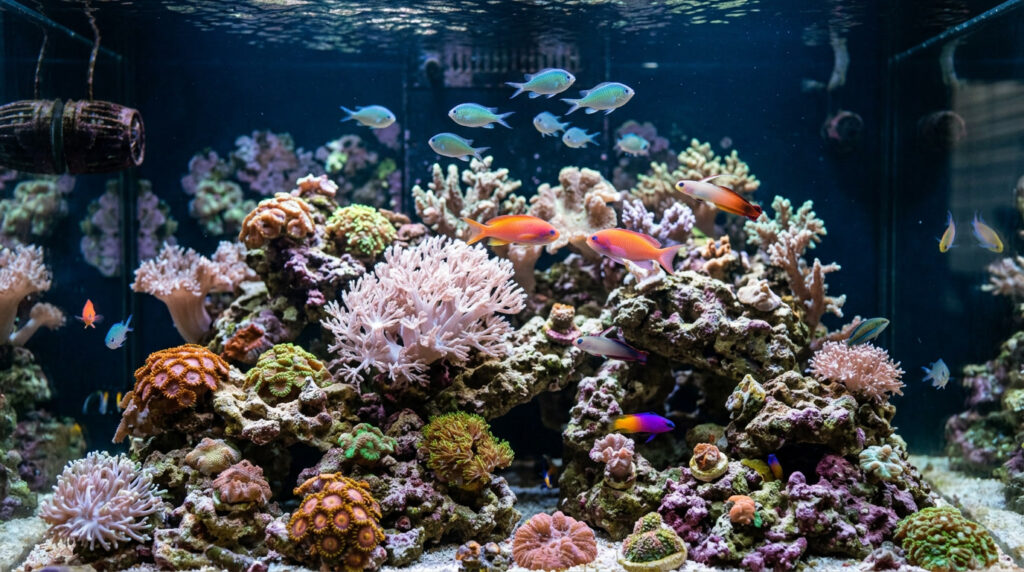
The best beginner reef fish are not just colourful.
They are:
Choosing the right fish early creates a calmer, healthier system that becomes much easier to manage long-term.
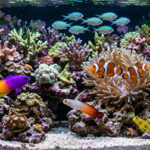
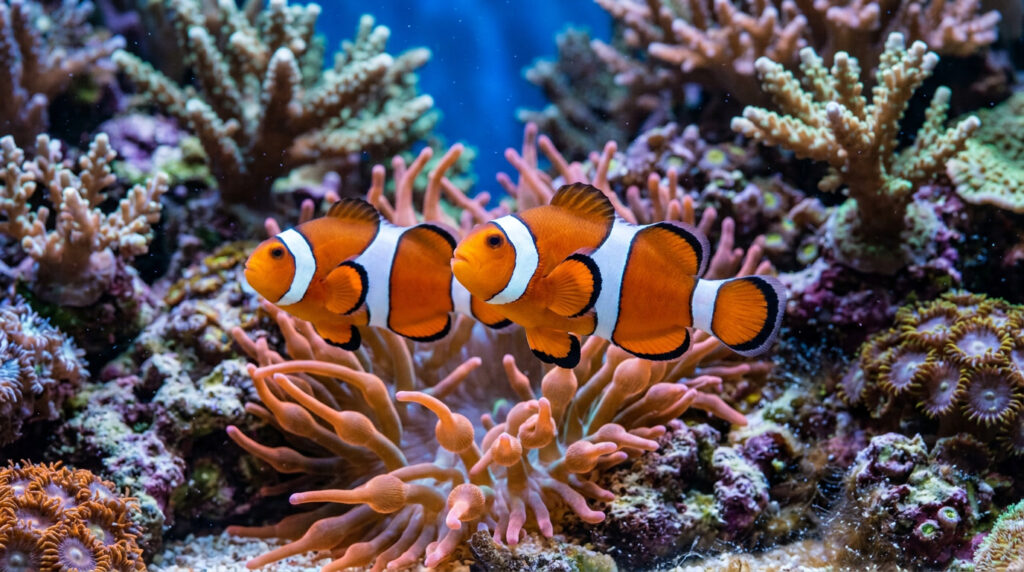
Almost every reefer starts with clownfish, and for good reason.
They are hardy, adaptable, and generally tolerant of beginner mistakes compared to more sensitive species.
Clownfish also develop strong personalities over time. Some become curious and interactive, while others claim specific corners of the tank as their territory.
For beginners:
From experience, clownfish are one of the easiest ways to add activity and colour without creating major compatibility issues.
Firefish are excellent beginner reef fish if your tank environment is calm.
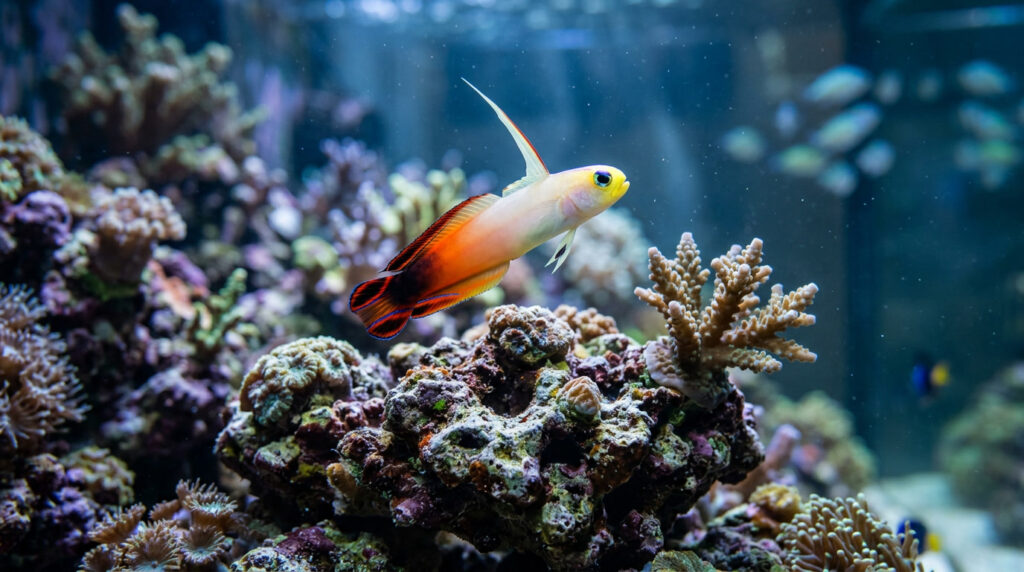
They are known for:
However, they are also timid and easily stressed by aggressive tankmates.
One thing many beginners learn the hard way is that firefish are jumpers.
If the tank has openings, eventually they may find one.
A covered tank is strongly recommended.
Gobies are some of the most entertaining fish in reef keeping.
Many species remain small, making them ideal for nano and medium-sized systems. Some perch on rocks, others sift sand constantly, and some even form symbiotic relationships with pistol shrimp.
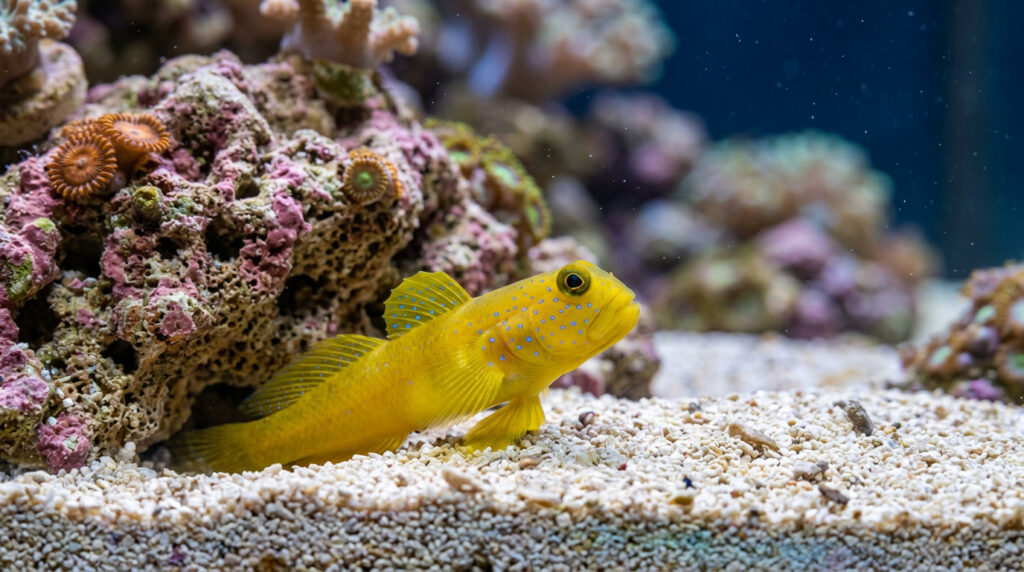
Good beginner gobies include:
From experience, gobies bring a lot of movement and character without adding excessive aggression to the tank.
Royal grammas are one of the most visually striking beginner fish.
Their purple and yellow coloration stands out immediately under reef lighting, yet they usually remain peaceful in community systems.
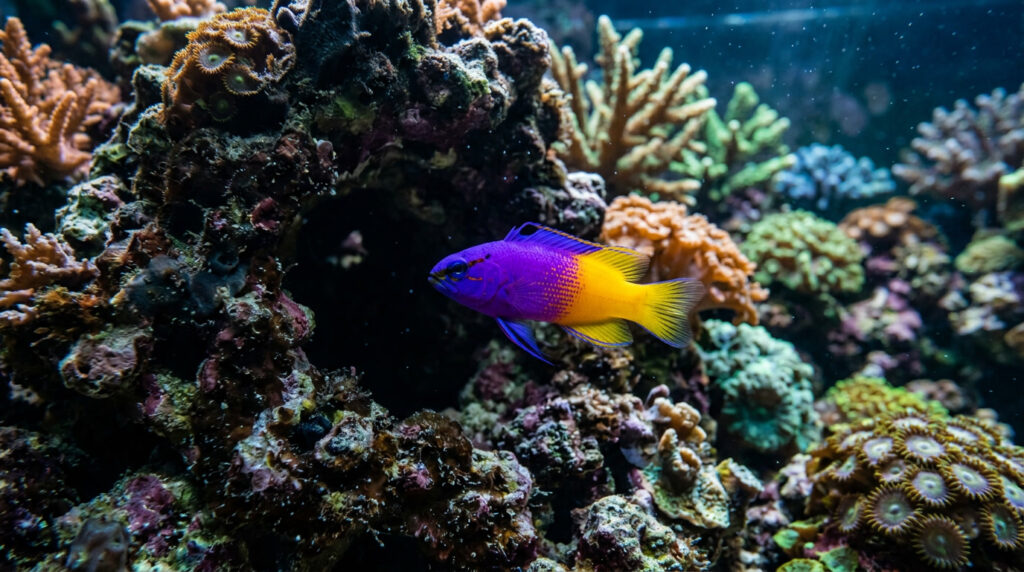
They prefer:
From experience, royal grammas become more confident over time once they establish territory.
Chromis add constant movement to a reef tank.
Unlike slower fish that remain near rocks, chromis actively swim in open water, giving the tank more energy and depth.
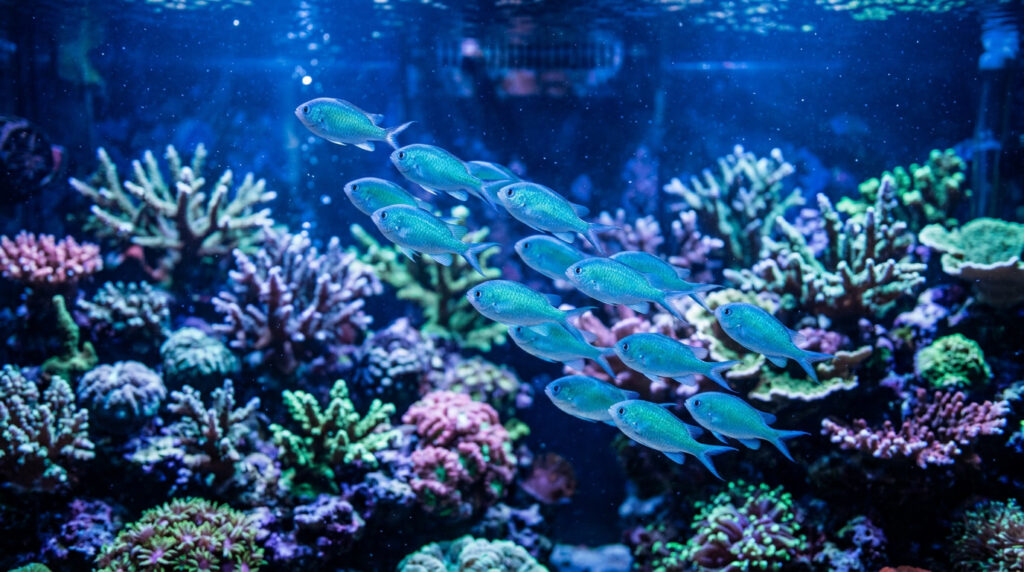
They are:
However, from experience, groups sometimes develop hierarchy aggression over time, especially in smaller tanks.
Keeping proper numbers and adequate swimming space matters.
One of the biggest mistakes beginners make is adding difficult or aggressive fish too early.
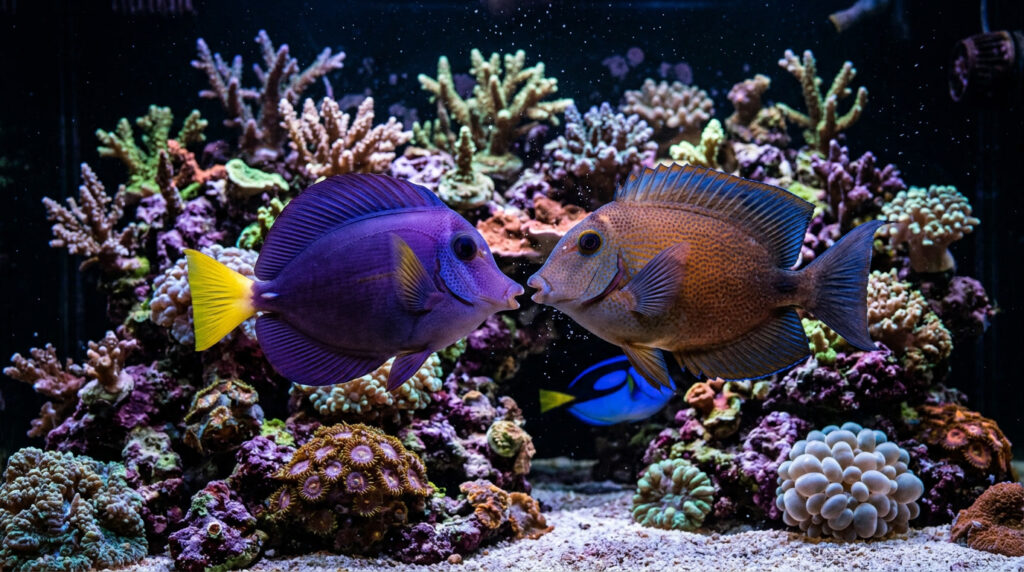
Common examples:
Many of these fish either outgrow beginner systems or require mature environments with specialised feeding.
From experience, patience saves both money and livestock.
A reef tank is not meant to be filled overnight.
Every fish added increases:
Adding too many fish too quickly destabilises even healthy systems.
From experience, successful reef tanks are built gradually.
Slow stocking allows:
Patience almost always leads to a stronger reef.
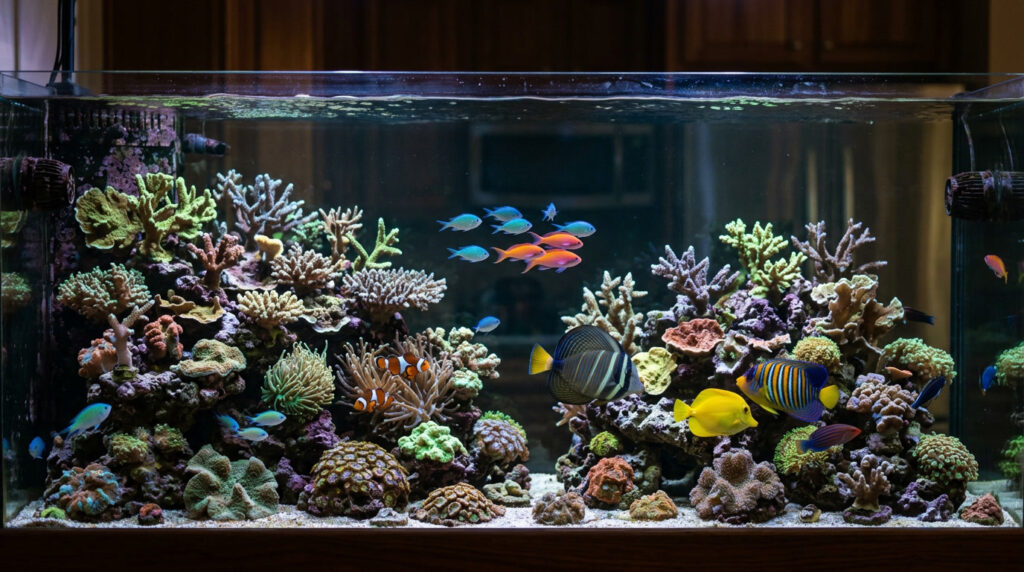
The best beginner reef fish are not necessarily the rarest or most expensive.
They are the species that:
Choosing the right fish early creates a healthier reef, fewer problems, and a far more enjoyable experience long-term.