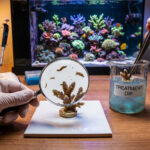
Coral Dipping Explained: Why Every New Coral Should Be Quarantined
One of the most expensive mistakes reef keepers make is introducing a new coral directly into their display tank without any form of inspection or treatment.
The coral may look healthy. The vendor may have an excellent reputation. The frag plug may appear completely clean.
Unfortunately, appearances can be deceiving.
Over the years, many reef keepers have learned this lesson the hard way after discovering unwanted hitchhikers spreading throughout their tanks. Flatworms, nudibranchs, parasitic pests, algae, and other unwanted organisms often arrive hidden within coral colonies.
A single coral can introduce a problem that takes months to eliminate.
This is why experienced reef keepers rarely place new corals directly into their display tanks. Instead, they rely on coral dipping and quarantine procedures to reduce risk before introducing new additions.
Coral dipping isn't complicated, expensive, or time-consuming. Yet it remains one of the most valuable habits a reefer can develop.
Coral dipping is the process of placing a newly acquired coral into a specially prepared treatment solution before adding it to your aquarium.
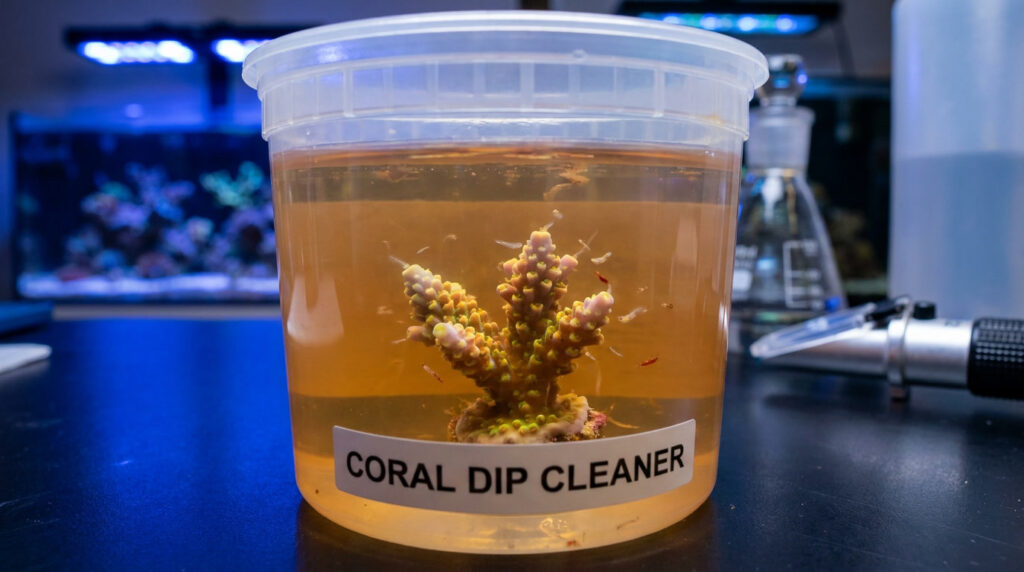
The purpose is simple:
Remove unwanted pests before they enter the display tank.
Unlike medications used to treat fish, coral dips are designed to irritate, stun, or detach pests hiding on coral tissue, branches, frag plugs, and crevices.
During the dipping process, reef keepers often discover organisms they never realised were present.
The coral itself usually remains unharmed when proper instructions are followed.
One of the biggest misconceptions in reef keeping is believing that a healthy-looking coral is automatically pest-free.
In reality, many coral pests are nearly invisible during casual inspection.
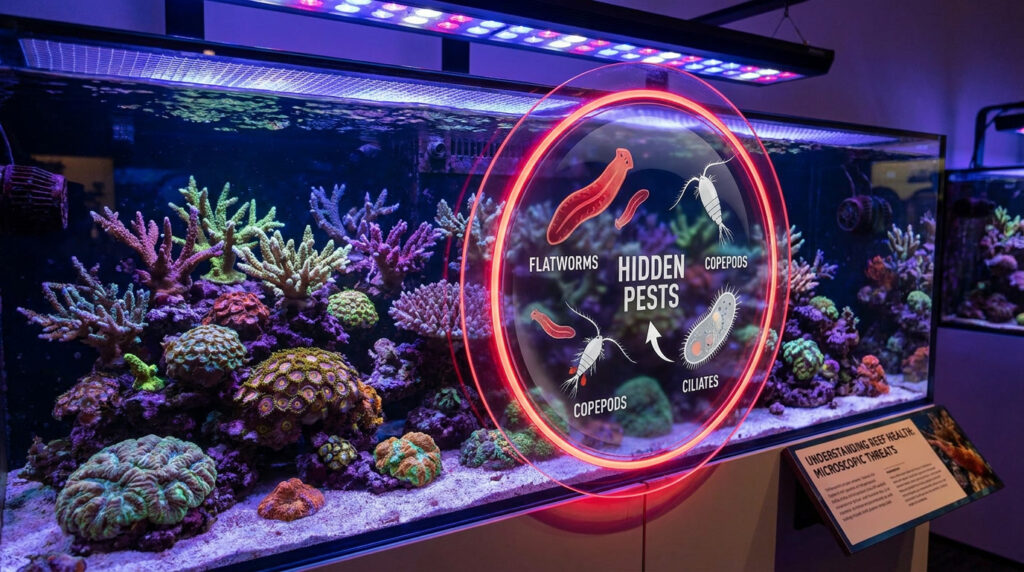
Eggs may be hidden beneath coral branches. Tiny flatworms can blend into tissue colouration. Algae spores may be attached to frag plugs. Some pests only become obvious once populations explode.
Even corals sourced from reputable systems can carry hitchhikers.
Coral dipping is not an accusation against the seller. It is simply good preventative husbandry.
Experienced reef keepers often assume every coral may carry something until proven otherwise.
Depending on the coral species, several unwanted organisms may arrive with new purchases.
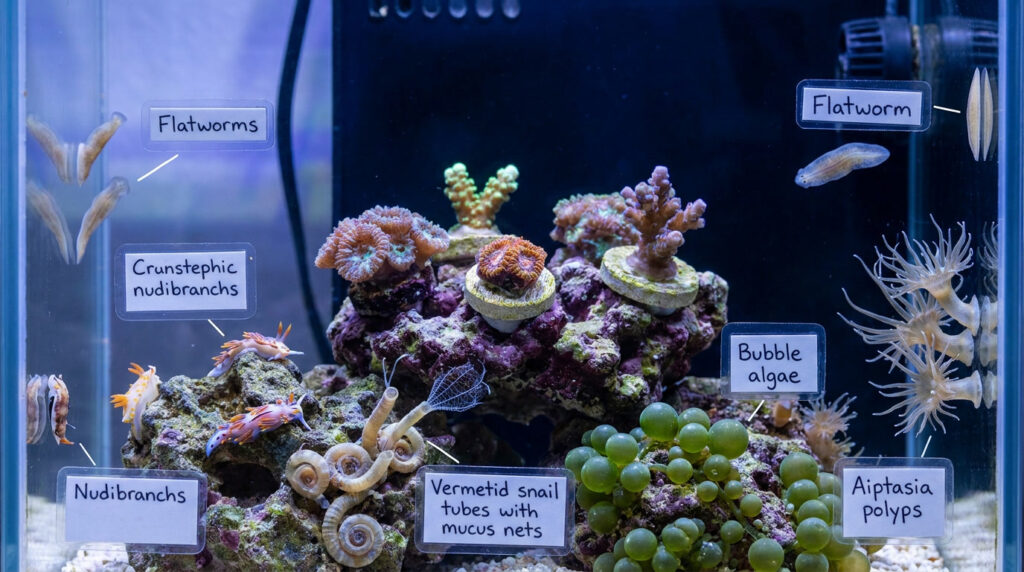
Common examples include:
Some are minor annoyances.
Others can cause serious coral losses if allowed to establish themselves throughout the system.
Prevention is almost always easier than removal.
Several coral dip products are widely trusted within the reefing community.
Popular choices include:
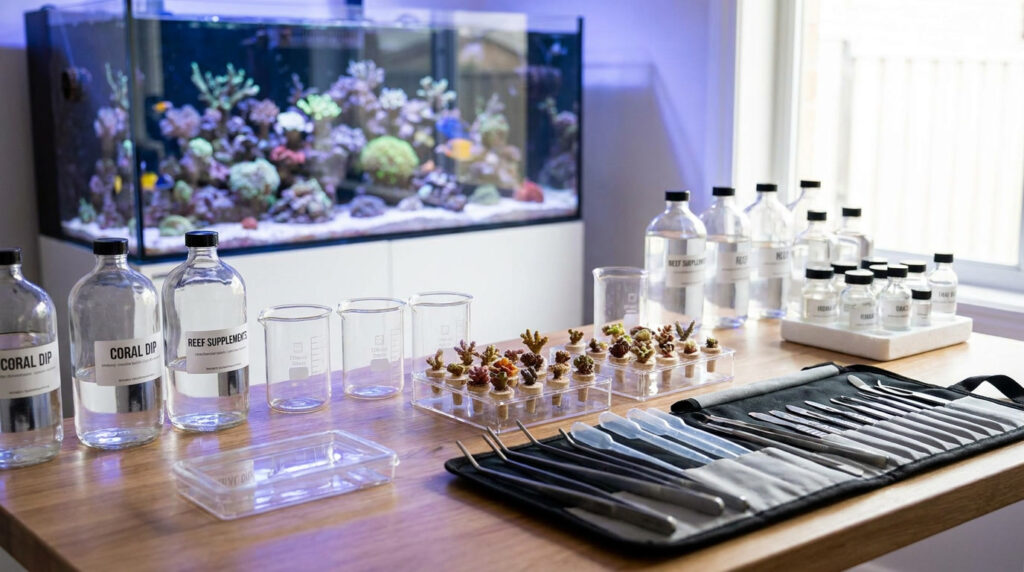
Each product uses different ingredients and instructions, so following manufacturer guidelines is important.
Some reef keepers also use iodine-based solutions for certain situations, although dedicated coral dip products generally offer broader protection.
Most coral dipping procedures follow a similar workflow:
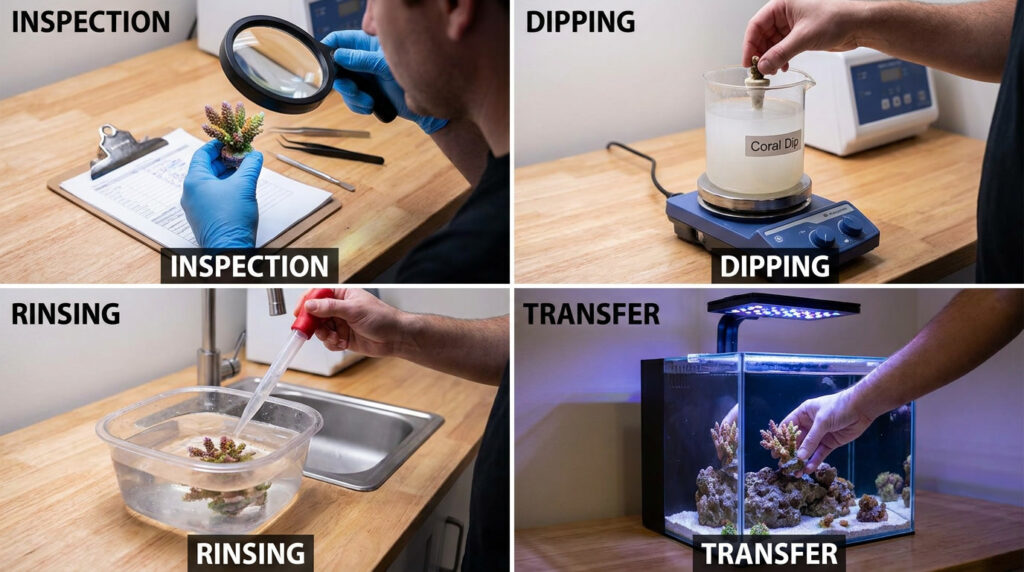
The entire process often takes less than fifteen minutes.
Considering the potential consequences of introducing pests, it is one of the highest-value maintenance routines in reef keeping.
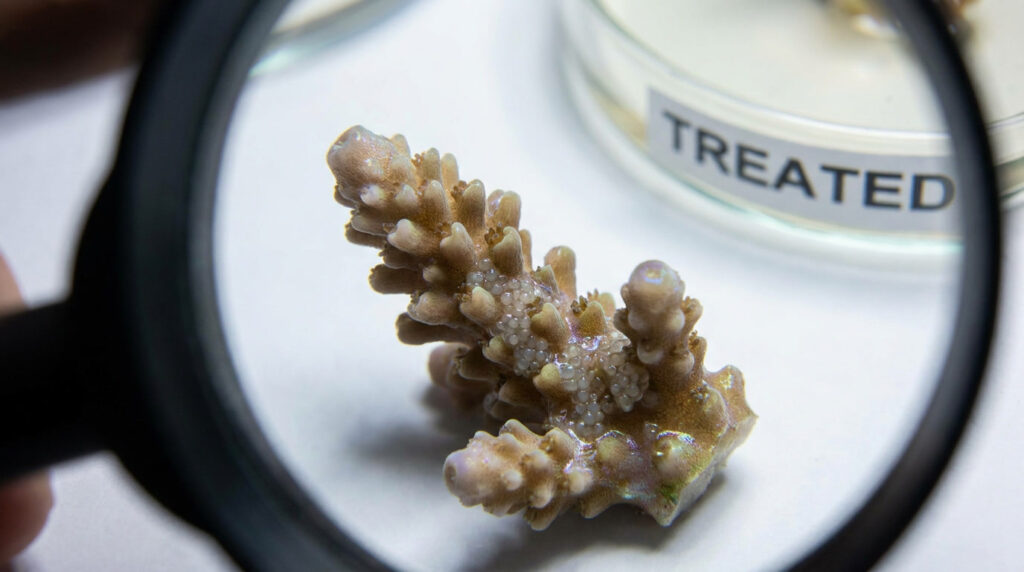
Coral dipping is highly effective, but it is not a magic solution.
Most dips do not reliably destroy pest eggs.
This means eggs may survive even if adult pests are removed.
For this reason, many advanced reef keepers combine dipping with quarantine procedures.
A dip greatly reduces risk.
A quarantine system provides the highest level of protection.
Think of coral dipping as the first line of defence.
Think of quarantine as the second.
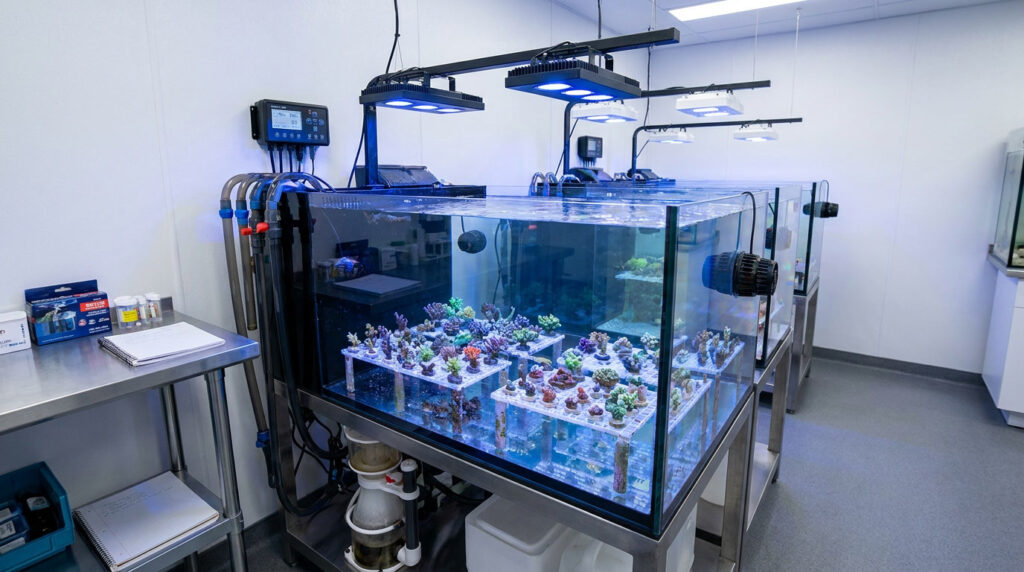
A quarantine system allows observation over several weeks before introducing corals into the display tank.
This approach helps identify hidden issues that may not be visible during a short dip treatment.
For valuable SPS collections and rare corals, quarantine often becomes standard practice.
Many beginners make avoidable mistakes such as:
The goal is risk reduction, not perfection.
Consistent procedures dramatically improve long-term reef health.
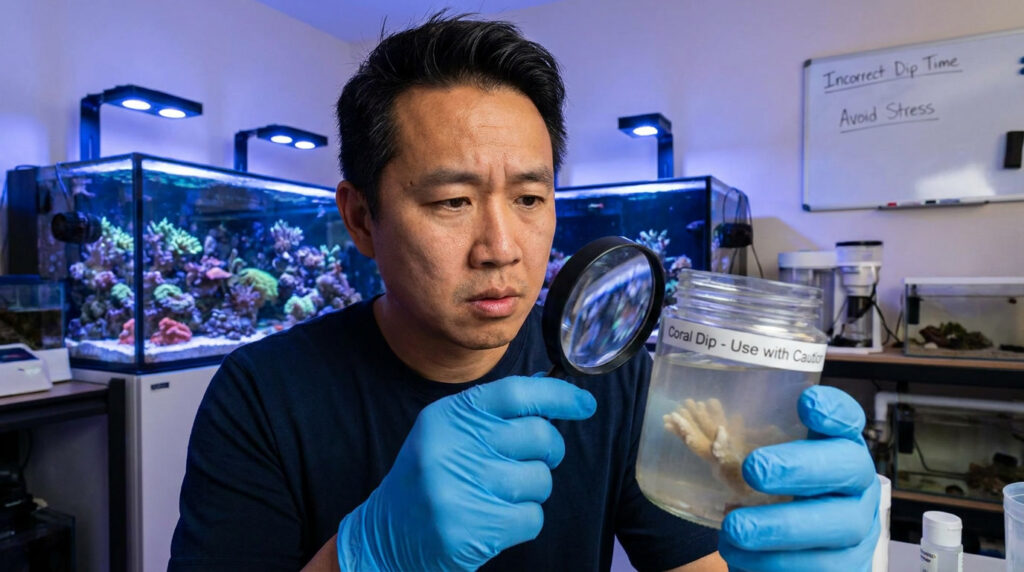
Every experienced reefer eventually develops a coral dipping routine.
Not because every coral carries pests, but because it only takes one overlooked hitchhiker to create months of frustration.
A few minutes spent dipping and inspecting corals today can save countless hours of treatment, removal, and recovery later.
Coral dipping is one of the simplest habits that separates reactive reef keeping from preventative reef keeping.